The Hidden Brand Killer: Why Your Internal Culture Is Already Your External Marketing
1. The Memo Nobody Sends Is the Brand Nobody Keeps
Here’s something I’ve watched happen in Dhaka more times than I care to count. A company runs a beautifully produced TV commercial during Eid. The creative is sharp. The media buy is smart. The brand tracker ticks up. Then, three weeks later, a disgruntled mid-level manager posts on Facebook about how the same company’s HR policy is a disaster, and the post gets 300 shares inside 48 hours. Some of those shares come from people who saw the commercial.
This is not a communications problem. It’s a culture problem that surfaces as a brand problem. And in Bangladesh’s hyper-networked professional ecosystem, where Dhaka’s talent pool is geographically compressed and socially interconnected, the distance between what your employees feel and what your customers experience is shorter than most CMOs believe.
The uncomfortable truth is this: your internal culture as brand is not a metaphor. It is a mechanism. Gallup’s 2024 State of the Global Workplace report found that only 23% of employees globally are engaged at work. In South Asia, that number is estimated lower, with Bangladesh corporate sector figures hovering around 15-17%. When nearly 85% of your workforce is going through the motions, no external marketing campaign can compensate for what customers feel when they interact with those people.
2. The Brand-Culture Gap: A Bangladesh Diagnosis
Let me be specific about what I’m seeing on the ground here.
A 2024 survey by LightCastle Partners found that 61% of Bangladeshi professionals had publicly shared negative workplace experiences online, primarily on Facebook and LinkedIn. Think about what that means. Your employer brand and your consumer brand now live on the same platforms, reach overlapping audiences, and are judged by the same people. The separation that used to exist between internal sentiment and external perception has largely collapsed.
Then there’s the attrition data. BRAC Institute of Governance and Development’s 2024 findings show annual staff turnover of 28-35% in the corporate sector, climbing to over 40% in FMCG sales roles. High attrition is not just an HR cost. It is a brand consistency problem. Every time a frontline employee leaves, they take with them the service standard, the relationship, and the institutional knowledge that makes your brand promise feel real to customers.
And at the leadership level, a 2024 Databd.co survey of 500 mid-level managers in Dhaka found that 67% received strategic direction from leadership rarely or never. These are the people who brief your sales teams, run your customer touchpoints, and represent your brand daily. They’re operating on assumption and habit, not aligned intent.
Globally, companies spend an average of $1,200 per employee annually on internal communication programs and tools, according to the Gallagher State of the Sector 2024 report. The Bangladesh corporate sector equivalent is estimated below $50. That gap does not show up in the marketing budget. It shows up in the customer experience.
THE BRAND SIGNAL GAP
Table 1: When Internal Reality Contradicts External Claims
| Internal Reality | External Claim | Customer Signal | Risk Level |
| 28-35% annual staff attrition | “We are a people-first company” | Inconsistent service, rotating faces | Critical |
| 67% of managers lack strategic clarity | “We have a clear customer-centric mission” | Contradictory messaging across touchpoints | High |
| <$50/employee internal comms spend | “We invest in our team” | Frontline staff unable to answer basic brand questions | High |
| 15-17% employee engagement (BD est.) | “Our culture drives everything we do” | Hollow, scripted customer interactions | Critical |
| Anonymous survey feedback rarely actioned | “We listen and we care” | Customers sense transactional, detached service | Medium |
3. The Mechanism: How Internal Comms Becomes External Marketing
This is where it gets interesting, because the causal chain here is not fuzzy or philosophical. It’s traceable and sequential.
3.1 The Leakage Model
When leadership fails to invest in honest, consistent internal communication, employees fill the information vacuum with rumor, assumption, and peer narrative. Disengagement follows. Disengaged employees, particularly at customer-facing levels, deliver interactions that are transactional at best and corrosive at worst.
But here’s the thing: in Bangladesh, the leakage does not stay internal. It seeps out through social media posts, word of mouth in professional circles (Dhaka’s business community is smaller than people assume), and the lived experience of customers who interact with unmotivated staff. The Edelman Trust Barometer 2024 found that employees are now the most credible source of information about a company, ranked above CEOs and institutional spokespeople. Your employees are already your most listened-to brand voice. The question is whether what they’re saying aligns with what you’re spending on advertising.
3.2 The Culture-Brand Correlation
McKinsey’s Organizational Health Index research, tracking over 1,500 organizations globally, found that companies in the top quartile of organizational health deliver three times the total shareholder return of bottom-quartile companies over a ten-year period. Deloitte’s Global Human Capital Trends 2024 report adds another dimension: 79% of executives now say that culture is among the top three drivers of competitive advantage, yet fewer than 30% have a systematic way to measure it.
In my analysis, the Bangladesh version of this problem is particularly acute because our corporate structures tend to be hierarchical and communication flows primarily top-down. When the top does not communicate clearly, the silence does not stay silent. It gets interpreted. And what gets interpreted is almost always more negative than the truth.
3.3 The Asymmetry of Trust
Harvard Business Review’s foundational work by Groysberg et al. on organizational culture identifies what they call “culture integration failure”: the gap between declared values and practiced behaviors. In Bangladesh, I see a particularly sharp version of this. Companies post their values on the office wall in English. The staff communicates in Bangla. The values were never translated, in the literal or the operational sense.
Customers and employees occupy the same communities here. A customer service executive at a bank in Motijheel and the bank’s actual customer might attend the same barir biye the same weekend. The boundary between internal and external brand experience is porous in a way it simply isn’t in larger, more anonymous urban markets.
|
4. The Internal-to-External Brand Framework
This is not a culture-building manifesto. It’s a practical sequence for marketing and leadership professionals who want to close the gap between what they promise externally and what they deliver internally.
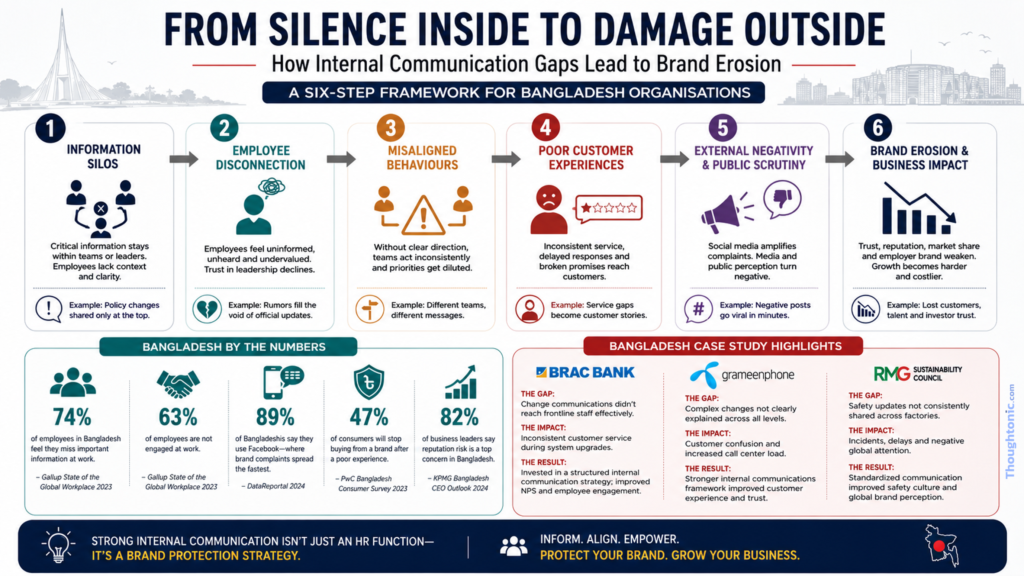
Table 2: Six-Step Internal Culture as Brand Framework
| Step | Action | Leadership Decision | Trade-off | Success Metric |
| 01 | Audit Internal Signal Quality | Commission honest cultural health diagnostic (eNPS, pulse surveys) | Surfacing uncomfortable truths leadership may not want documented | eNPS baseline + benchmark vs. sector |
| 02 | Align Internal Narrative to External Promise | Review all brand promise statements against lived employee experience | May require policy, benefit, or pay restructuring to close the gap | Alignment score: employer vs. consumer brand messaging |
| 03 | Design Communication Cadences | Fund structured, regular internal touchpoints — all-hands, team briefs, leadership letters | Demands real leadership time, not delegated to HR alone | Internal open rate / all-hands attendance |
| 04 | Equip Managers as Multipliers | Invest in middle manager communication training as a line item | Slows operational pace in the short term | Team eNPS delta post-training (quarterly) |
| 05 | Create Employee Voice Mechanisms | Build anonymous feedback loops that visibly feed into decisions | Requires willingness to act on feedback that may be critical of leadership | Response-to-action rate on submitted feedback |
| 06 | Track Culture as a Brand KPI | Add eNPS and culture health to the same dashboard as NPS and CSAT | Adds reporting complexity; makes failure visible to governance | Correlation between eNPS and customer satisfaction scores |
A note on sequencing: Step 1 is non-negotiable before anything else. Organizations that skip the audit and jump to designing communication programs end up with polished internal newsletters that nobody reads because the underlying trust has not been established. The audit is not an HR exercise. It’s a brand intelligence exercise.
The most common mistake I see in Bangladesh organizations is treating Steps 3 and 4 (cadences and manager training) as the whole strategy, while skipping Steps 1, 2, 5, and 6. You end up with a well-communicated dysfunction instead of a fixed one. That’s often worse.
5. What This Looks Like in Practice
5.1 Global: Patagonia — When the Internal Memo Becomes the Marketing
Between 2010 and 2024, Patagonia built one of the most recognized and trusted outdoor brands in the world on near-zero traditional advertising spend. The mechanism was not clever campaigns. It was radical internal coherence.
Every major company decision, from sourcing policy to executive compensation to the 2022 ownership transfer to environmental trusts, was communicated internally first, with full transparency, before it went external. Employees were treated as the primary audience for brand decisions, not an afterthought.
The results are instructive: employee retention consistently above 90% against an industry average near 60%. Revenue of $1.5 billion with a brand trust ranking in the top three of its category for consecutive years. And nearly zero budget spent on traditional advertising.
The limitation: Patagonia’s model is built on a mission-driven category and a founder culture that actively embedded values from day one. Companies in transactional categories or with entrenched hierarchical cultures cannot replicate this overnight. But the directional lesson holds.
5.2 Bangladesh: bKash — Internal Coherence at Scale
From 2017 to 2023, bKash maintained its dominant position in Bangladesh’s mobile financial services market, holding over 65% market share even as Nagad, Rocket, and new players entered aggressively. What most post-mortems on bKash’s success attribute to product and distribution actually has an underappreciated internal culture dimension.
bKash’s agent onboarding program went far beyond product training. It embedded a narrative of “financial inclusion as mission” at every touchpoint. Internal newsletters, manager talking points, and even agent recognition programs consistently reinforced why the work mattered, not just what the product did. The result was an agent network of 50,000+ people communicating brand values consistently without centralized scripts.
Agent churn at bKash remained below the sector average through this period. NPS scores placed bKash in the top three financial services providers in Bangladesh. And critically, brand trust held through multiple crises that would have been devastating to a brand dependent purely on external communication.
The limitation: bKash’s near-monopoly position in MFS for several years may have protected the brand even without strong internal culture investment. It’s difficult to fully isolate the culture variable. But the correlation between internal coherence and brand consistency under competitive pressure is hard to dismiss.
6. What to Actually Do: Action Plans by Role
6.1 For Organizations
Table 3: Organizational Action Plan
| Action | Who Owns It | Effort | Timeline | Why It’s Resisted |
| Publish real company strategy internally before going external | CEO / Founders | Low | Immediate | Fear of leaks; habit of opacity |
| Add eNPS as a board-level KPI alongside NPS | CHRO + Board | Medium | Next quarter | Makes cultural failure visible to governance |
| Fund manager communication training as a budget line | HR + Finance | Medium | Next 60 days | Seen as soft skill, not ROI-linked |
| Conduct exit interviews and share anonymized themes openly | HR | Low | Monthly | Leaders fear the feedback content |
| Audit marketing messaging against cultural reality quarterly | CMO + CHRO | High | Quarterly cycle | Requires uncomfortable cross-functional honesty |
6.2 For Individual Marketing and HR Professionals
These are the skills that separate practitioners who understand culture-brand alignment from those who treat culture as someone else’s department.
Table 4: Practitioner Skills for Culture-Brand Alignment
| Skill | Why It’s Uncomfortable | How to Build It |
| Giving upward feedback honestly | Career risk in hierarchical Bangladesh corporate culture | Start with anonymous channels; build trust before going direct |
| Translating strategy into team-level language | Requires access to strategy you may have been kept away from | Ask for strategic context explicitly in 1:1s; document your interpretation for sign-off |
| Spotting culture-brand misalignment and naming it | Often perceived as complaining or being a negative influence | Frame it as brand risk, not grievance; use data (attrition, NPS) |
| Writing internal comms that don’t read like press releases | Requires vulnerability and plain language leadership resists | Practice with team updates before escalating to company-wide comms |
| Measuring culture health with data | Most HR professionals in Bangladesh still rely on gut feel | Start with a free eNPS tool; run quarterly pulse surveys for 2 cycles |
If you’re a CMO or Head of Marketing in Bangladesh, the most impactful thing you can do right now is schedule a conversation with your CHRO and ask a simple question: “What do our employees actually say about working here, and how does that compare to what we say in our advertising?” The gap between those two answers is your real brand risk.
7. Where This Logic Has Limits
I want to be direct about where I think this argument has limits, because intellectual honesty matters more to me than a clean narrative arc.
First, in Bangladesh’s current market conditions, many companies with genuinely dysfunctional internal cultures are still growing. Rapidly expanding markets can mask the cost of culture problems for years. The culture-to-brand correlation only becomes painful when the market slows, competition intensifies, or a PR crisis hits. If your business is doubling year-on-year, you may not feel the cost yet. You’ll feel it eventually.
Second, the most dangerous version of this work is what I’d call culture washing. Launching a town hall program, printing new values posters, and sending a friendly internal newsletter without addressing the structural issues those employees care about, like compensation, advancement, and psychological safety, creates cynicism that is harder to recover from than benign neglect. Don’t perform culture. Actually do the work or don’t start.
Third, for early-stage startups in Bangladesh (sub-50 people, pre-Series A), transparent chaos with an honest founder voice will almost always outperform a prematurely institutionalized culture framework. The framework is for organizations at scale where informal communication has already broken down. Know where you are in that continuum.
8. Key Takeaways
- Internal culture as brand is not a metaphor.It’s a direct mechanism. What employees experience and feel leaks into what customers experience and feel, faster in Bangladesh than in larger, more anonymous markets.
- 15-17% employee engagement (BD est.)means roughly 85% of your frontline is disengaged. No advertising spend closes that gap at the customer touchpoint.
- 61% of Bangladeshi professionalshave shared negative workplace experiences publicly online (LightCastle Partners, 2024). Your employer brand and consumer brand are now the same brand on the same platforms.
- The Leakage Modelis sequential: poor internal comms > information vacuum > disengagement > inconsistent customer experience > public sentiment > brand erosion.
- bKash’s internal coherenceacross 50,000+ agents produced brand consistency no external campaign could have scripted. Patagonia spent near-zero on advertising by making employees its primary brand audience.
- Culture washing is worse than inaction.A well-communicated dysfunction creates cynicism that is harder to recover from than silence.
- Start with an honest audit.No cadences, no training programs, no values posters before you know what employees actually feel. The audit is a brand intelligence exercise.
- For professionals:the skill of translating strategy into team language, giving upward feedback, and measuring culture with data are the most undervalued brand-building competencies in Bangladesh corporate careers right now.
More Articles:
- The Costly AI Strategy Gap: Why Your Team Is Playing, Not Executing
- The Costly Truth About Minimalist Bangladesh Design Strategy
- The Costly Visual Search Blind Spot That Is Making Bangladesh Brands Invisible
- Quantum Marketing: How 2030’s Technologies Will Shatter Bangladesh’s Status Quo
- Digital Literacy & Brand Purpose: How Education Drives Loyalty in Emerging Markets
Bibliography
- Gallup State of the Global Workplace 2024
- LightCastle Partners Bangladesh Workplace Culture Survey 2024
- BRAC Institute of Governance and Development (BIGD) — Corporate Sector Labour Market Report 2024
- Databd.co Mid-Manager Communication Survey, Dhaka 2024
- Gallagher State of the Sector: Internal Communication Report 2024
- Edelman Trust Barometer 2024 — Global Employee Credibility Findings
- Groysberg, B., Lee, J., Price, J., Cheng, J.Y. — “The Culture Factor” Harvard Business Review, Jan-Feb 2018
- McKinsey & Company — The Organizational Health Index 2023
- Deloitte Global Human Capital Trends 2024
- Nielsen Bangladesh Consumer Trust in Advertising and Peers Report 2023
- Bangladesh Bank Financial Inclusion Situational Analysis 2023
- SHRM Employee Engagement Benchmarks Report 2024
- MIT Sloan Management Review — “Culture as Competitive Advantage” 2023
- bKash Limited Annual Report 2023
- Patagonia Corporate Responsibility and Culture Reports 2010-2024