
The Brain’s Buy Button: How Neuromarketing Taps into Consumer Decision-Making (Global & Bangladesh Insights)
The Brain’s Buy Button: How Neuromarketing Taps into Consumer Decision-Making
Why does a customer choose one brand over another when both products are nearly identical? Why do your focus groups say they love an advertisement, only for the campaign to fail in the market?
For decades, marketers have relied on what consumers tell us. We use surveys, interviews, and focus groups to measure intent. The problem is, consumers often cannot articulate the real reason they make a choice. Many decisions are not conscious. They are subconscious, emotional, and instant.
This gap between what people say and what they do is the most expensive problem in marketing.
This challenge is escalating in Bangladesh. The market is more crowded than ever.
- By 2029, 78% of all advertising spend in Bangladesh is projected to be digital (Statista, 2024).
- The e-commerce market is forecast to surge to USD $12.44 billion by 2029 (Statista, 2024).
- Your brand is not just competing with local rivals. It competes with global giants on the same Facebook feed, which 52.90 million Bangladeshis used in early 2024 (DataReportal, 2024).
In this high-speed digital economy, capturing attention is not enough. You must understand the subconscious drivers of choice. This is the domain of neuromarketing.
Neuromarketing is not a futuristic concept. It is a present-day business tool that uses neuroscience to understand the brain’s responses to marketing stimuli. It measures what consumers feel, not just what they say. This article explains the science, the data, and the actionable frameworks you can use.
The Neuromarketing Market: A Global & Regional Snapshot
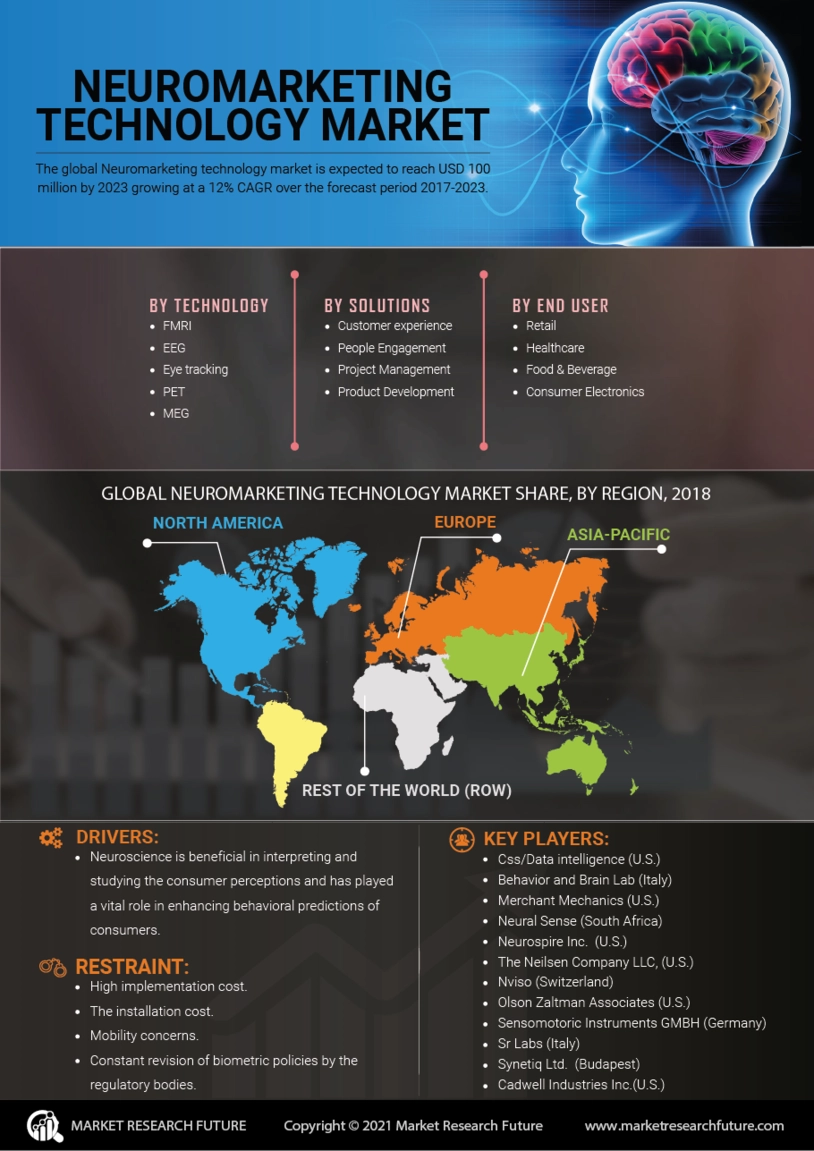
Neuromarketing has moved from academic labs to corporate boardrooms. The industry’s growth is a clear indicator of its perceived value.
- Global Market: The global neuromarketing market was valued between USD $1.54 billion and $1.71 billion in 2024 (Business Research Insights & Straits Research, 2024).
- Future Growth: The market is projected to grow at a Compound Annual Growth Rate (CAGR) of approximately 8.8%, reaching over USD $3.6 billion by 2033 (Straits Research, 2024).
- Market Leaders: North America currently holds the largest market share.
- The Growth Engine: The Asia-Pacific (APAC) region is projected to be the fastest-growing market. This growth is driven by rising adoption in China, Japan, and India (Straits Research, 2024).
What does this mean for Bangladesh? As a key emerging economy in South Asia, Bangladesh sits at the epicenter of this growth. While specific, recent public data on neuromarketing adoption in Bangladesh is limited, the opportunity is clear.
Consider the Fast-Moving Consumer Goods (FMCG) sector.
- The Bangladesh FMCG market is valued at approximately USD $4 billion (Invest Bangladesh, 2023).
- However, per capita FMCG spending in Bangladesh is only USD $23.
- This is significantly lower than neighboring India (USD $44) or China (over USD $100) (Invest Bangladesh, 2023).
This gap represents a massive opportunity. Brands that use deeper consumer insights will be the ones to capture this future growth. Even a foundational 2017 study found high levels of awareness and interest in neuromarketing among marketers in Bangladesh (ResearchGate, 2017). The interest was present then; the technology and urgency are present now.
The Science: Why We Need More Than Surveys
The core principle of neuromarketing comes from a famous 2004 study at Baylor College of Medicine on Coca-Cola versus Pepsi.
In a blind taste test, participants showed a preference for Pepsi, and their brain’s reward center (the ventral putamen) lit up. However, when the brands were revealed, participants overwhelmingly said they preferred Coke. This time, a different part of the brain became active: the medial prefrontal cortex. This is the area associated with higher thinking, self-identity, and brand association.
The lesson: The brand’s power (Coke) literally overrode the sensory pleasure (Pepsi). A traditional survey would have only captured the stated preference for Coke, missing the why entirely.
Neuromarketing tools are designed to capture both responses. Recent research confirms this distinction:
- A 2023 study found that neuro-tools (like EEG) and eye-tracking were more accurate than self-reported surveys at predicting ad memorability.
- However, the same study noted that surveys were still valuable for predicting conscious purchase intent (Fiveable, 2023).
The most successful brands do not choose one method. They combine traditional “what” data with neuro “why” data for a complete picture.
The Neuromarketing Toolkit: What Brands Actually Measure
Neuromarketing is not one single thing. It is a set of tools used to measure three core components: Attention, Emotion, and Memory.
| Technology | What It Measures | How It Works | Key Data Point |
| Eye-Tracking | Visual Attention (Cognitive) | High-speed cameras track where a person’s gaze lands, how long it stays (dwell time), and the path it takes. | High Correlation: Recent studies show a strong link between product attractiveness and metrics like dwell time and fixation size (ResearchGate, 2025). |
| EEG (Electroencephalography) | Emotional Engagement (Affective) | A cap with sensors measures the speed of electrical activity (brainwaves) in the brain with millisecond precision. | Most Used Tool: Today, EEG is the most-used neuromarketing method because it is fast, relatively affordable, and excellent for dynamic stimuli like video ads (Unravel Research, 2025). |
| fMRI (Functional MRI) | Motivation & Desire (Cognitive) | A large scanner tracks blood flow to different brain regions. It reveals which part of the brain is active. | The “Why” Tool: While slower than EEG, fMRI can pinpoint deep-seated motivations like pleasure, trust, or disgust, (e.g., the Coke vs. Pepsi study) (Unravel Research, 2025). |
Export to Sheets
You can also use Facial Coding to analyze micro-expressions for emotional response and Biometrics (heart rate, skin conductance) to measure arousal or excitement.
Case Studies: From Global Giants to South Asian Startups
How does this work in practice?
- Global (Historical): Frito-Lay & the “Cheeto” Brain
Frito-Lay (a PepsiCo company) wanted to understand why consumers loved Cheetos. Focus groups said they liked the taste. But neuro-data told a different story.
- Method: EEG
- Finding: Researchers discovered that the messy, bright-orange cheese dust that consumers said they disliked was actually the biggest source of subconscious pleasure. The EEG showed a high level of “cognitive engagement” related to this “messy” tactile feedback.
- Outcome: Instead of “cleaning up” the product as surveys suggested, Frito-Lay doubled down. They launched the “The Orange Underground” campaign, which celebrated the messy, rebellious fun of getting cheese dust on your fingers. The campaign was a massive success.
- South Asia (Recent): FMCG Eye-Tracking in India
A 2025 study in Bengaluru, India, provides a perfect regional example for the FMCG market.
- Method: Eye-Tracking & Surveys
- Goal: Researchers wanted to understand how consumers choose self-care products (soaps, shampoos) in a crowded retail environment.
- Finding: The eye-tracking data was definitive. Visual attention—what consumers looked at first and longest—was a powerful predictor of their final choice, often more so than their stated preferences for price or quality. Emotional advertising and brand imagery directly influenced where the eye went.
- Outcome: The research concluded that for FMCG brands in South Asia, winning the “first glance” is critical. Brands using neuromarketing can optimize packaging to ensure their product is the most visually “attractive” on the shelf, guiding the consumer’s eye and influencing the purchase before a conscious choice is even made.
The 5-Step Framework for Applying Neuro-Insights
You do not need an fMRI machine to start. You can apply the principles of neuromarketing to your brand strategy today.
- Define Your Core Question Do not start with “Let’s do neuromarketing.” Start with a business problem.
- Bad Question: “What do consumers think of our ad?”
- Good Question: “At which specific second in our new TV ad do we lose the viewer’s attention?”
- Choose the Right Level of Insight
- DIY (Low-Cost): Apply known principles. For example, we know from eye-tracking that faces draw attention. Are the faces in your ad looking at the product or at the camera? The viewer’s eye will follow their gaze. This is a simple neuro-hack.
- Outsourced (Medium-Cost): Use scalable neuro-tech platforms. Companies now offer AI-powered eye-tracking and facial coding using a simple webcam, allowing you to test creative assets quickly and affordably.
- Lab (High-Cost): Partner with a specialized firm for a full EEG or fMRI study. Reserve this for high-stakes launches, such as new packaging for a flagship product.
- Test the Subconscious First Before you ask a single survey question, test the creative with neuro-tools. Measure the raw emotional and attentional response. This gives you an unfiltered baseline of what the brain really thinks.
- Combine with Traditional Research After the neuro-test, run your traditional survey. Ask why they think they liked the ad or if they intend to buy.
- Integrate and Act Compare the two datasets.
- If Neuro (Feel) = Survey (Say): You have a clear winner.
- If Neuro (Feel) ≠ Survey (Say): This is your biggest insight. Your ad may be emotionally engaging but has a confusing message. Or, it’s a “guilty pleasure” (like Cheetos) that people love but won’t admit to. This is where you find your biggest competitive advantage.
The Risks & Ethical Pitfalls: A Critical View
The power of neuromarketing brings significant ethical responsibility. This is not mind control, but it is persuasive. With over 300 neuromarketing companies operating globally (IGI Global, 2024), the industry is grappling with new rules.
Research from 2024 highlights the key tension: the conflict between marketing efficacy and the growing need to protect consumer privacy, especially under regulations like GDPR (Cogent Business & Management, 2024).
The primary risks include:
- Subconscious Manipulation: Using neuro-insights to “trigger” purchases without the consumer’s conscious awareness.
- Exploiting Vulnerability: Targeting individuals (e.g., children, or those in sensitive emotional states) with precision-tuned stimuli.
- Data Privacy: Biometric data (your brainwave patterns, your heart rate) is the most personal data on earth. Who owns it? How is it stored?
As a professional, your role is to use these tools for empathy, not exploitation. The goal is to make products and messages better and more relevant for the consumer, not to trick them.
Action Plan: What You Can Do Next
This field is moving quickly. Here is how you can prepare and act.
For Organizations & Brands in Bangladesh:
- Start small. You do not need a full lab. Start by investing in AI-powered eye-tracking or facial coding platforms to pre-test your digital ad creative.
- Train your teams. Send your brand managers and market researchers to workshops on consumer neuroscience. Build this competency internally.
- Prioritize ethics. Create a clear internal policy on the use of biometric and neuro-data before you ever collect it.
For Professionals (Marketers, Managers):
- Become the expert. Read the foundational books (e.g., Buyology by Martin Lindstrom). Be the person in the room who can explain why the focus group data might be wrong.
- Ask better questions. Challenge your agencies. Instead of asking “Did the ad perform well?”, ask “What was the emotional valence score at the 10-second mark when the brand was revealed?”
- Think like a scientist. Form a hypothesis, test it, and use the data. Your gut feeling is valuable; your gut feeling backed by brain data is unstoppable.
For Graduate Students & Entry-Level Employees:
- Add this to your toolkit. If your background is in business, take an elective in psychology. If your background is in psychology, take one in marketing.
- Get certified. Look for online certifications in consumer neuroscience. This will immediately differentiate you in the job market.
- Analyze existing work. Use the principles you’ve learned to deconstruct a successful ad campaign in Bangladesh. What neuro-principles did it use (e.g., color theory, gaze-cueing, emotional contagion)?
Key Takeaways
- The Market is Crowded: With 78% of ad spend in Bangladesh going digital by 2029, traditional marketing is not enough to stand out.
- Consumers Don’t Know Why: People often cannot articulate their true motivations. Neuromarketing measures the subconscious “why” behind the “what.”
- It’s a Growing Global Industry: The neuromarketing market is valued at over USD $1.7 billion (2024) and the Asia-Pacific region is its fastest-growing market.
- Tools Provide Specific Answers: Eye-tracking measures attention, EEG measures emotion, and fMRI measures motivation.
- South Asia is Adopting: A 2025 study in India confirmed eye-tracking is highly effective for optimizing FMCG packaging and advertising in the region.
- Ethics Are Non-Negotiable: The power of these tools requires a strict “empathy over exploitation” approach to protect consumer privacy and autonomy.
The next generation of great brands, in Bangladesh and globally, will be built by those who understand the human brain. The question is, will you be one of them?
Bibliography
Bibliography
- Business Research Insights. (2024). Neuromarketing Market Size & Share Trends, 2033.
- DataReportal. (2024). Digital 2024: Bangladesh.
- Fiveable. (2023). 1.3 Neuromarketing vs. traditional marketing research.
- Granthaalayah Publications. (2025). Exploring Neuromarketing Techniques: A Quantitative Analysis of Eye-Tracking and Emotional Advertising on FMCG Self-Care Product Selection in Bengaluru.
- IGI Global. (2024). Exploring the Ethical Issues and Considerations in Neuromarketing.
- Invest Bangladesh. (2023). FMCG – Invest Bangladesh.
- KiKinben.com. (2024). The eCommerce market in Bangladesh (Citing Statista).
gladesh - ResearchGate. (2017). Challenges and prospects of neuromarketing: Bangladesh perspective.
https://www.researchgate.net/publication/327895431_Challenges_and_prospects_of_neuromarketing_Bangladesh_perspective
- ResearchGate. (2025). Neuromarketing Insights: Using Eye-Tracking and Machine Learning to Understand Consumer Preferences.
https://www.researchgate.net/publication/393178867_Neuromarketing_Insights_Using_Eye-Tracking_and_Machine_Learning_to_Understand_Consumer_Preferences_for_University_Promotional_Products
- Stanford Law School. (2008). Neuro-Cola: Neuroscience’s ability to measure consumer preference (Part 1) (Referencing the 2004 Baylor study).
https://law.stanford.edu/2008/10/07/neuro-cola-neurosciences-ability-to-measure-consumer-preference-part-1/
- Straits Research. (2024). Neuromarketing Market Size, Share & Growth Report by 2033.
https://straitsresearch.com/report/neuromarketing-market
- Taylor & Francis Online (Cogent Business & Management). (2024). Neuromarketing algorithms’ consumer privacy and ethical considerations.
https://ideas.repec.org/a/taf/oabmxx/v11y2024i1p2333063.html
- The Financial Express. (2024). Local ad market shifting to digital media, traditional media getting marginalised (Citing Statista Market Insights).
https://thefinancialexpress.com.bd/economy/local-ad-market-shifting-to-digital-media-traditional-media-getting-marginalised
- Unravel Research. (2025). EEG or fMRI in Neuromarketing Research? 5 Crucial Differences.
https://www.unravelresearch.com/en/blog/key-differences-between-eeg-and-fmri-in-neuromarketing-research
Read more – Building the AI-Powered Enterprise: Strategy, Foundations, and the Future WorkforcePainting Perception, Crafting Character: The Psychology of Color & Typography in BrandingBeyond the Hype: The Future of Influencer Marketing in Bangladesh





24 Responses
[…] The Brain’s Buy Button: How Neuromarketing Taps into Consumer Decision-Making (Global & Bangla… […]
[…] The Brain’s Buy Button: How Neuromarketing Taps into Consumer Decision-Making (Global & Bangla…Beyond the Bot: The Empathy Mandate for AI-Driven Customer Service in Bangladesh: A Data-Driven RoadmapBuilding the AI-Powered Enterprise: Strategy, Foundations, and the Future WorkforceNavigating Bangladesh’s Social Media Surge: Trends, Strategies, and Opportunities in 2025Painting Perception, Crafting Character: The Psychology of Color & Typography in Branding […]
[…] The Brain’s Buy Button: How Neuromarketing Taps into Consumer Decision-Making (Global & Bangla…Beyond the Bot: The Empathy Mandate for AI-Driven Customer Service in Bangladesh: A Data-Driven RoadmapBuilding the AI-Powered Enterprise: Strategy, Foundations, and the Future WorkforceNavigating Bangladesh’s Social Media Surge: Trends, Strategies, and Opportunities in 2025Painting Perception, Crafting Character: The Psychology of Color & Typography in Branding […]
[…] The Brain’s Buy Button: How Neuromarketing Taps into Consumer Decision-Making (Global & Bangla…Beyond the Bot: The Empathy Mandate for AI-Driven Customer Service in Bangladesh: A Data-Driven RoadmapBuilding the AI-Powered Enterprise: Strategy, Foundations, and the Future WorkforceNavigating Bangladesh’s Social Media Surge: Trends, Strategies, and Opportunities in 2025Painting Perception, Crafting Character: The Psychology of Color & Typography in Branding […]
[…] The Brain’s Buy Button: How Neuromarketing Taps into Consumer Decision-Making (Global & Bangla…Beyond the Bot: The Empathy Mandate for AI-Driven Customer Service in Bangladesh: A Data-Driven RoadmapBuilding the AI-Powered Enterprise: Strategy, Foundations, and the Future WorkforceNavigating Bangladesh’s Social Media Surge: Trends, Strategies, and Opportunities in 2025Painting Perception, Crafting Character: The Psychology of Color & Typography in Branding […]
[…] AI in Bangladeshi Advertising: Opportunities, Ethical Risks & Implementation Guide 2025The Brain’s Buy Button: How Neuromarketing Taps into Consumer Decision-Making (Global & Bangla…Beyond the Bot: The Empathy Mandate for AI-Driven Customer Service in Bangladesh: A Data-Driven […]
[…] AI in Bangladeshi Advertising: Opportunities, Ethical Risks & Implementation Guide 2025The Brain’s Buy Button: How Neuromarketing Taps into Consumer Decision-Making (Global & Bangla…Beyond the Bot: The Empathy Mandate for AI-Driven Customer Service in Bangladesh: A Data-Driven […]
[…] AI in Bangladeshi Advertising: Opportunities, Ethical Risks & Implementation Guide 2025The Brain’s Buy Button: How Neuromarketing Taps into Consumer Decision-Making (Global & Bangla…Beyond the Bot: The Empathy Mandate for AI-Driven Customer Service in Bangladesh: A Data-Driven […]
[…] AI in Bangladeshi Advertising: Opportunities, Ethical Risks & Implementation Guide 2025The Brain’s Buy Button: How Neuromarketing Taps into Consumer Decision-Making (Global & Bangla…Beyond the Bot: The Empathy Mandate for AI-Driven Customer Service in Bangladesh: A Data-Driven […]
[…] AI in Bangladeshi Advertising: Opportunities, Ethical Risks & Implementation Guide 2025The Brain’s Buy Button: How Neuromarketing Taps into Consumer Decision-Making (Global & Bangla…Beyond the Bot: The Empathy Mandate for AI-Driven Customer Service in Bangladesh: A Data-Driven […]
[…] AI in Bangladeshi Advertising: Opportunities, Ethical Risks & Implementation Guide 2025The Brain’s Buy Button: How Neuromarketing Taps into Consumer Decision-Making (Global & Bangla…Beyond the Bot: The Empathy Mandate for AI-Driven Customer Service in Bangladesh: A Data-Driven […]
[…] AI in Bangladeshi Advertising: Opportunities, Ethical Risks & Implementation Guide 2025The Brain’s Buy Button: How Neuromarketing Taps into Consumer Decision-Making (Global & Bangla…Beyond the Bot: The Empathy Mandate for AI-Driven Customer Service in Bangladesh: A Data-Driven […]
[…] AI in Bangladeshi Advertising: Opportunities, Ethical Risks & Implementation Guide 2025The Brain’s Buy Button: How Neuromarketing Taps into Consumer Decision-Making (Global & Bangla…Beyond the Bot: The Empathy Mandate for AI-Driven Customer Service in Bangladesh: A Data-Driven […]
[…] AI in Bangladeshi Advertising: Opportunities, Ethical Risks & Implementation Guide 2025The Brain’s Buy Button: How Neuromarketing Taps into Consumer Decision-Making (Global & Bangla…Beyond the Bot: The Empathy Mandate for AI-Driven Customer Service in Bangladesh: A Data-Driven […]
[…] AI in Bangladeshi Advertising: Opportunities, Ethical Risks & Implementation Guide 2025The Brain’s Buy Button: How Neuromarketing Taps into Consumer Decision-Making (Global & Bangla…Beyond the Bot: The Empathy Mandate for AI-Driven Customer Service in Bangladesh: A Data-Driven […]
[…] AI in Bangladeshi Advertising: Opportunities, Ethical Risks & Implementation Guide 2025The Brain’s Buy Button: How Neuromarketing Taps into Consumer Decision-Making (Global & Bangla…Beyond the Bot: The Empathy Mandate for AI-Driven Customer Service in Bangladesh: A Data-Driven […]
[…] AI in Bangladeshi Advertising: Opportunities, Ethical Risks & Implementation Guide 2025The Brain’s Buy Button: How Neuromarketing Taps into Consumer Decision-Making (Global & Bangla…Beyond the Bot: The Empathy Mandate for AI-Driven Customer Service in Bangladesh: A Data-Driven […]
[…] AI in Bangladeshi Advertising: Opportunities, Ethical Risks & Implementation Guide 2025The Brain’s Buy Button: How Neuromarketing Taps into Consumer Decision-Making (Global & Bangla…Beyond the Bot: The Empathy Mandate for AI-Driven Customer Service in Bangladesh: A Data-Driven […]
[…] AI in Bangladeshi Advertising: Opportunities, Ethical Risks & Implementation Guide 2025The Brain’s Buy Button: How Neuromarketing Taps into Consumer Decision-Making (Global & Bangla…Beyond the Bot: The Empathy Mandate for AI-Driven Customer Service in Bangladesh: A Data-Driven […]
[…] AI in Bangladeshi Advertising: Opportunities, Ethical Risks & Implementation Guide 2025The Brain’s Buy Button: How Neuromarketing Taps into Consumer Decision-Making (Global & Bangla…Beyond the Bot: The Empathy Mandate for AI-Driven Customer Service in Bangladesh: A Data-Driven […]
[…] AI in Bangladeshi Advertising: Opportunities, Ethical Risks & Implementation Guide 2025The Brain’s Buy Button: How Neuromarketing Taps into Consumer Decision-Making (Global & Bangla…Beyond the Bot: The Empathy Mandate for AI-Driven Customer Service in Bangladesh: A Data-Driven […]
[…] AI in Bangladeshi Advertising: Opportunities, Ethical Risks & Implementation Guide 2025The Brain’s Buy Button: How Neuromarketing Taps into Consumer Decision-Making (Global & Bangla…Beyond the Bot: The Empathy Mandate for AI-Driven Customer Service in Bangladesh: A Data-Driven […]
[…] AI in Bangladeshi Advertising: Opportunities, Ethical Risks & Implementation Guide 2025The Brain’s Buy Button: How Neuromarketing Taps into Consumer Decision-Making (Global & Bangla…Beyond the Bot: The Empathy Mandate for AI-Driven Customer Service in Bangladesh: A Data-Driven […]
[…] The Costly Visual Search Blind Spot That Is Making Bangladesh Brands InvisibleQuantum Marketing: How 2030’s Technologies Will Shatter Bangladesh’s Status QuoDigital Literacy & Brand Purpose: How Education Drives Loyalty in Emerging MarketsGenerative AI in Bangladeshi Advertising: Opportunities, Ethical Risks & Implementation Guide 2025The Brain’s Buy Button: How Neuromarketing Taps into Consumer Decision-Making (Global & Bangla… […]